
A bag of dried beef can look simple until the first bite tells a completely different story. In the dried beef chips vs biltong debate, the real difference is not just where each snack comes from. It is the cut, the cure, the texture, and whether you want a loud, satisfying crunch or a tender, savory chew.
Both are portable beef snacks with serious flavor potential. But they deliver that flavor in very different ways. If standard jerky has left you chewing longer than you would like, knowing the difference can help you find a beef snack that actually matches your cravings.
Dried Beef Chips vs Biltong at a Glance
Dried beef chips are made for crispness. Beef is sliced very thin, seasoned or marinated, then dried until it takes on a light, chip-like snap. The best versions still taste unmistakably like beef, but the eating experience is closer to opening a crunchy snack than tearing through a thick strip of jerky.
Biltong is a South African-style cured meat, traditionally made from larger cuts of beef. The meat is commonly seasoned with vinegar, salt, coriander, and spices before air-drying. The finished texture can range from moist and tender to firmer and chewier, depending on the cut and how long it is dried.
Neither style is automatically better. The right choice comes down to what you want from the bag: an easy, crunchy handful or a more substantial, sliced-meat bite.
Texture Is the Biggest Difference
Texture is where dried beef chips and biltong split fast.
Dried beef chips are thin by design. That thinner cut lets seasoning reach more surface area and gives each piece a crisp finish. Instead of working through a dense piece of meat, you get a quick bite, a clean crunch, and a savory finish that keeps you reaching back into the bag. This format is especially appealing to snackers who love the idea of meat snacks but do not want something overly tough, leathery, or sticky.
Biltong starts with thicker pieces of beef, so it remains more meat-forward in its chew. A good piece of biltong can be tender and rich, with a soft center and a concentrated cured flavor. It is a great fit when you want a snack that feels closer to a charcuterie-style meat than a crispy snack chip.
There is variation in both categories. Some beef chips are more brittle than crisp, while some biltong is dried longer for a firmer bite. Still, the general rule holds: beef chips bring the crunch, while biltong brings the chew.
How Each Snack Builds Flavor
Biltong’s flavor profile is tied closely to its curing tradition. Vinegar provides a tangy edge, coriander adds a warm, aromatic note, and the beef develops depth during air-drying. It can be beautifully simple, especially for people who enjoy classic cured meats and want the flavor of the beef to stay front and center.
Dried beef chips can take a broader flavor-first approach. Because the slices are wafer-thin, every bite gets plenty of marinade and seasoning. That creates room for big, direct flavors - cracked pepper heat, roasted garlic richness, a spicy kick, or a balanced savory original blend.
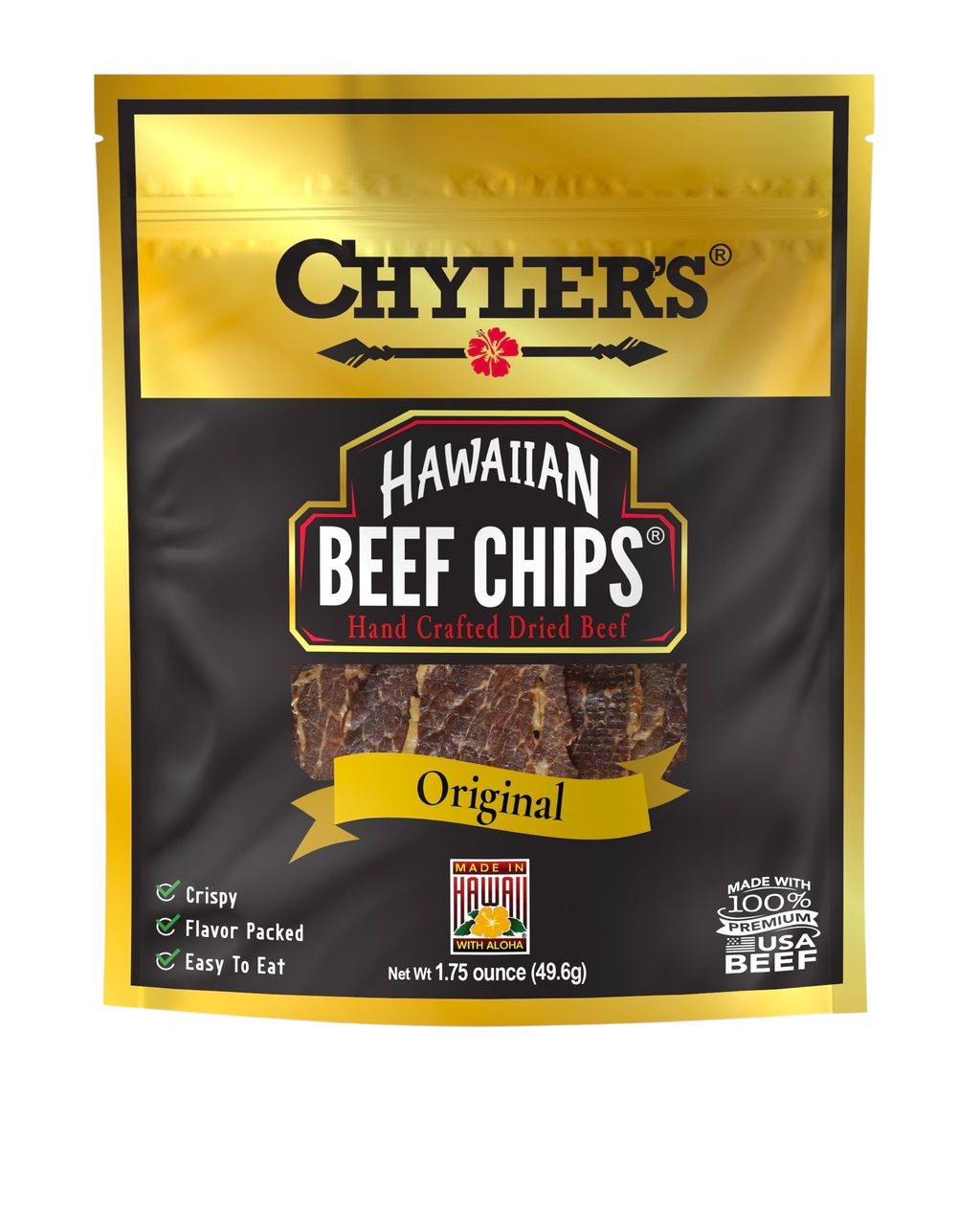
This is where Hawaiian Beef Chips® stand apart. Chyler’s uses premium US beef, authentic Hawaiian flavors, and a meticulous process to create a uniquely crave-worthy chip-like crunch. The result is not just dried meat made thinner. It is a bold snack built to deliver seasoning, beef flavor, and texture all at once.
For people who like a cleaner, traditional cure, biltong may be the move. For people who choose snacks based on flavor payoff, dried beef chips usually have the edge.
The Cut and Process Change the Bite
Biltong is often made from whole-muscle cuts, such as top round or silverside. The beef is cured, hung, and air-dried, then sliced into pieces. Because it begins as a larger cut, you may see visible grain and variation from piece to piece. That is part of its appeal. Biltong can feel handcrafted, substantial, and deeply rooted in a time-tested preservation method.
Dried beef chips begin with beef sliced much thinner. That cut is not a shortcut. It is a deliberate choice that changes everything about the finished snack. Thin slices dry differently, season differently, and create a lighter bite. Done well, they hold a satisfying crunch without losing the savory character that makes beef snacks so satisfying.
The process also affects how you snack. Biltong can be something you eat slowly, piece by piece. Beef chips are easier to share, grab by the handful, or keep nearby during a road trip, game day, or late-afternoon hunger strike.
What About Protein, Sodium, and Ingredients?
Both dried beef chips and biltong can be convenient sources of protein, but the nutrition label matters more than the category name. Recipes vary by brand, cut, serving size, marinade, and curing method. A snack that feels light because it is crisp can still be concentrated in sodium, while a tender biltong can have a different protein count depending on its moisture level.
Check the serving size first. Then compare protein, sodium, added sugar, and ingredients based on what matters to you. If you are looking for a high-protein snack after a workout, protein per serving may be your priority. If you are managing sodium, that number deserves a closer look. If you prefer a specific flavor profile, the ingredient list can tell you whether the snack leans peppery, garlicky, smoky, sweet, or hot.
One format is not inherently healthier than the other. The smarter call is choosing a product with ingredients and nutrition that fit your routine - and a texture you will genuinely enjoy eating.
When Dried Beef Chips Are the Better Pick
Choose dried beef chips when you want the familiar satisfaction of a crunchy snack without reaching for another potato chip. Their thin, crisp format makes them especially good for people who find traditional jerky too tough or biltong too soft and chewy. They are also a natural fit when bold seasoning is part of the craving.
Beef chips shine when snack time is casual and fast. Keep them in a desk drawer, bring them on a flight, set them out for a watch party, or pack them for a beach day. The crunch gives the experience more energy than a standard dried meat strip, and the beef keeps it firmly in savory-snack territory.
If you are shopping for a memorable gift from Hawaii or want a regional snack with more personality than ordinary jerky, Hawaiian-style beef chips bring something distinct to the table.
When Biltong Makes More Sense
Choose biltong when you want a thicker, more traditional cured-meat experience. Its tender chew and vinegar-forward seasoning can be especially satisfying for fans of charcuterie, steak bites, and classic spice blends. It also works well when you want to slow down and savor the beef itself rather than chase a crunchy texture.
Biltong is not supposed to mimic a chip, and that is the point. Its appeal is in the substantial cut, the cured flavor, and the range from moist and soft to dry and firm. If that sounds like your kind of snack, biltong deserves a spot in the rotation.
The Best Choice Depends on Your Craving
The dried beef chips vs biltong choice is less about declaring a winner and more about choosing the right kind of satisfaction. Biltong delivers a tender, traditional cured-meat bite with distinctive tang and spice. Dried beef chips deliver thin-sliced beef, bigger surface flavor, and a crisp crunch that makes every handful feel like snack time done better.
When your craving calls for bold Hawaiian flavor and a crunch that keeps the bag interesting, reach for dried beef chips. Your next snack does not have to chew like the past.